
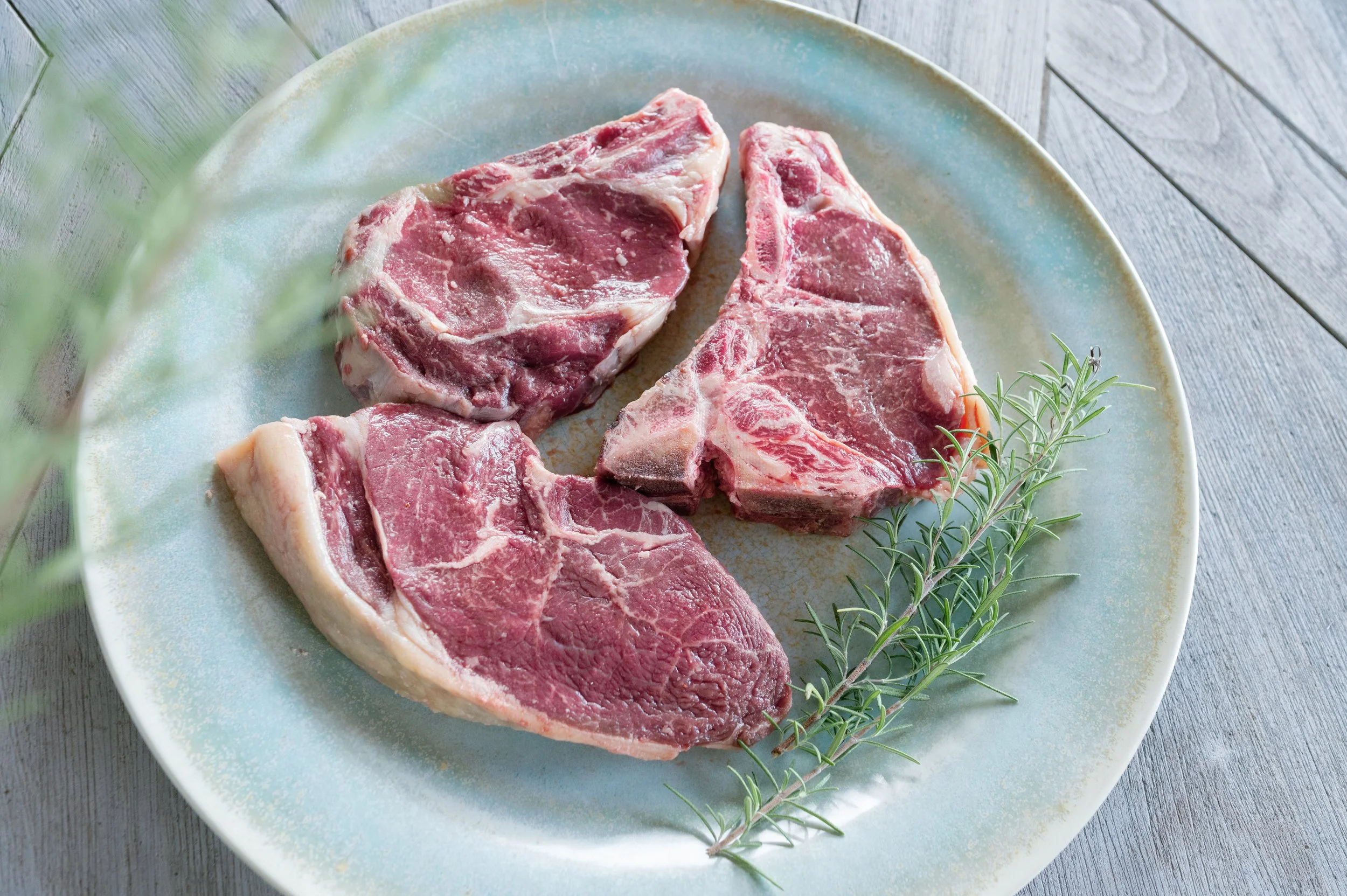
Full Blood Japanese Wagyu.
The Genuine Article.
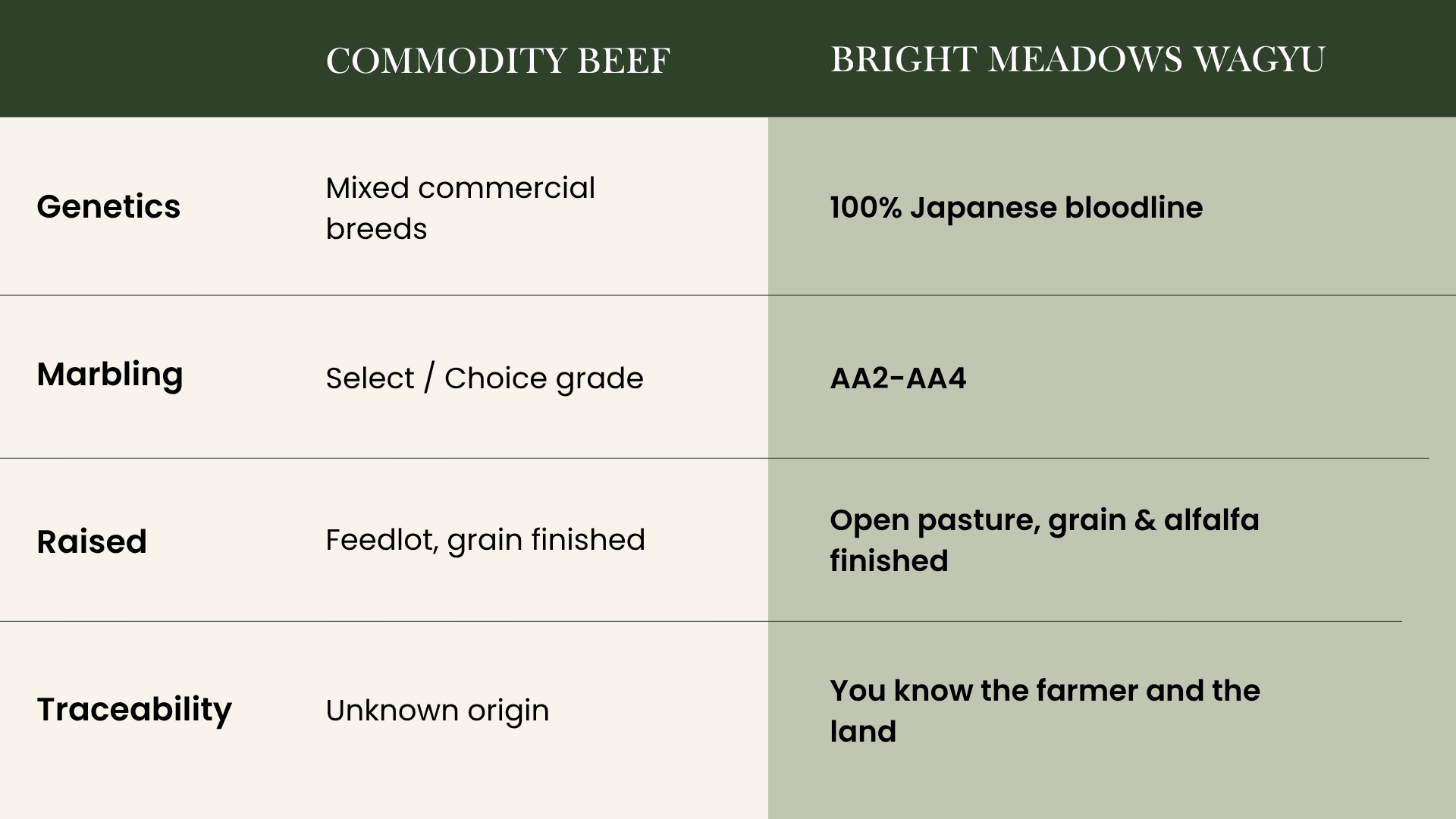
Most Wagyu sold in the U.S. is a hybrid Angus crossed with Wagyu and marketed like the real thing. Ours isn’t. Here’s what 100% Japanese bloodline actually means for what ends up on your plate.
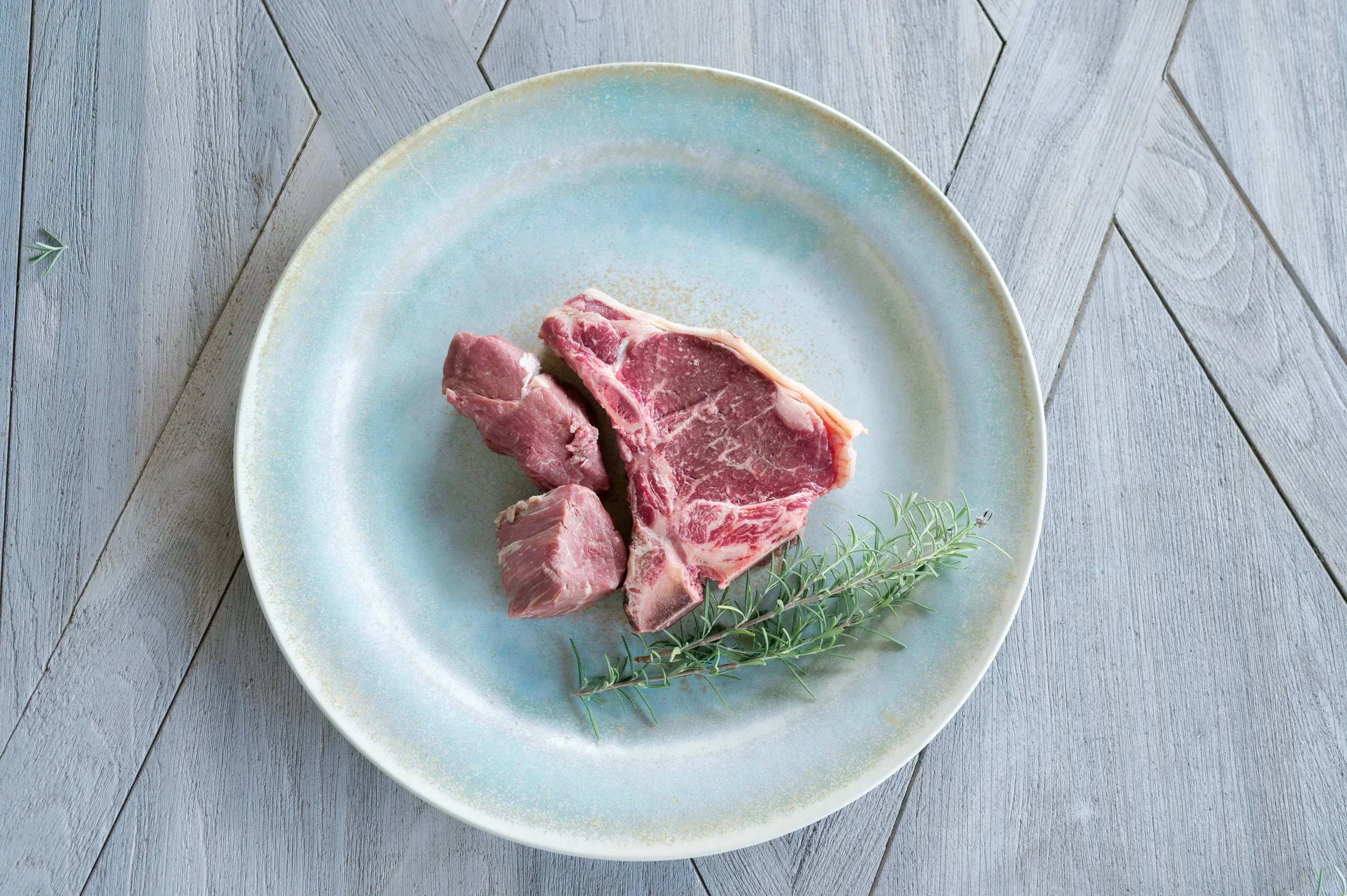
What “Full Blood Wagyu” Actually Means
Walk into most grocery stores, and the “Wagyu” on the label is usually American Wagyu, a cross between Angus and Wagyu genetics, bred for a faster turnaround and a bigger carcass.
It isn’t fake, exactly. But it isn’t the genuine article either and a discerning palate can tell the difference.
At Bright Meadows Farm, we raise 100% Japanese‑bloodline Wagyu. Full blood, not crossbred, the same genetics responsible for the marbling and flavor Wagyu is known for worldwide, raised on pasture in Hall County, Georgia, instead of shipped halfway around the world.
Marbling, Explained
Wagyu is graded on marbling — the thin threads of fat woven through the muscle that melt as the beef cooks, carrying flavor through every bite. Bright Meadows cattle finish in the AA2–AA4 range.
AA1
Commodity beef
AA2
Bright Meadows
— entry
AA3
Bright Meadows
— typical
AA4
Bright Meadows
— peak
AA5
Bright Meadows
— peak
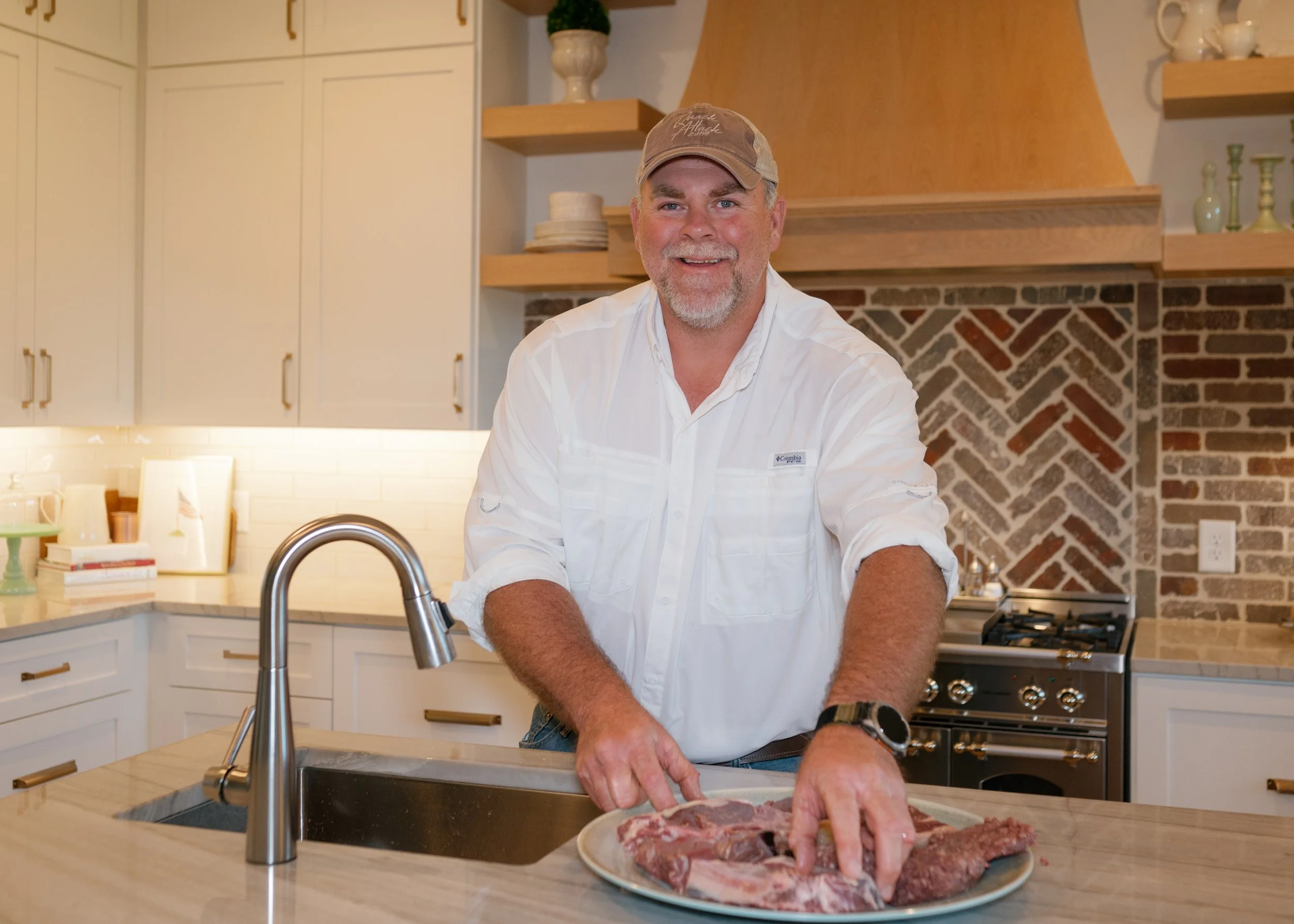
“I’m not chasing the highest score just to chase it. Push the marbling too far and every bite starts to taste like a spoonful of butter instead of beef. AA2 to AA4 is the sweet spot — incredible texture, and it still tastes like steak.”
— Corey Hulsey, Bright Meadows Farm
Why Docile Cattle Make
Better Beef
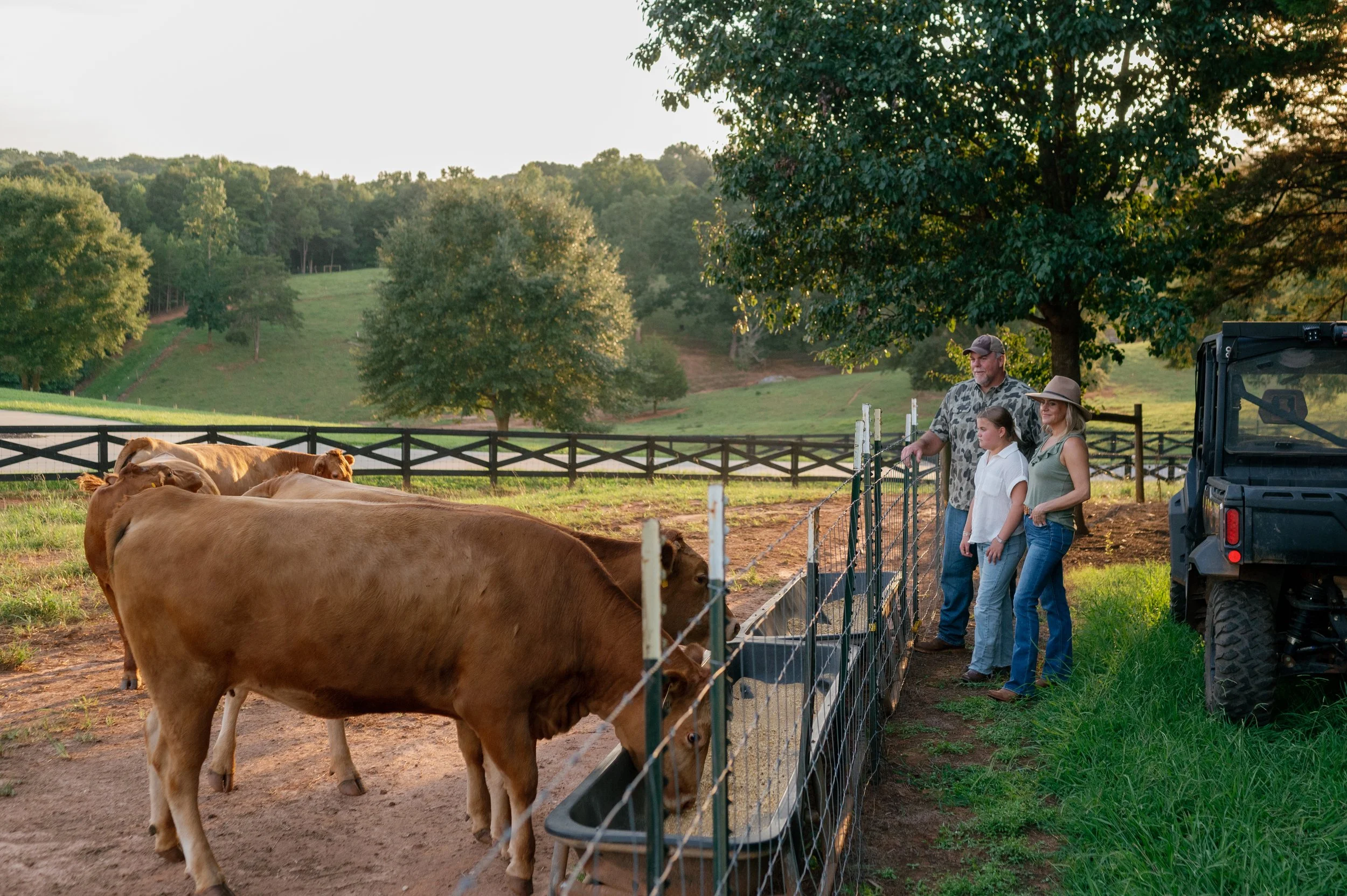
Wagyu are naturally calm animals, and that’s not just a personality quirk, it matters for the meat. Stressed cattle produce tougher, less consistent beef.
At Bright Meadows, the cattle have room to move, clean water, and pasture instead of a crowded dirt lot. Less stress on the animal becomes more tenderness on your plate — the same principle behind a cow you can cut with a fork instead of fighting with a knife.

The breed only tells half the story. The other half is the land, the feed, and the way the cattle are treated every day they’re here, and that’s a story that deserves its own page.
The Comparison
Wagyu vs All the Rest
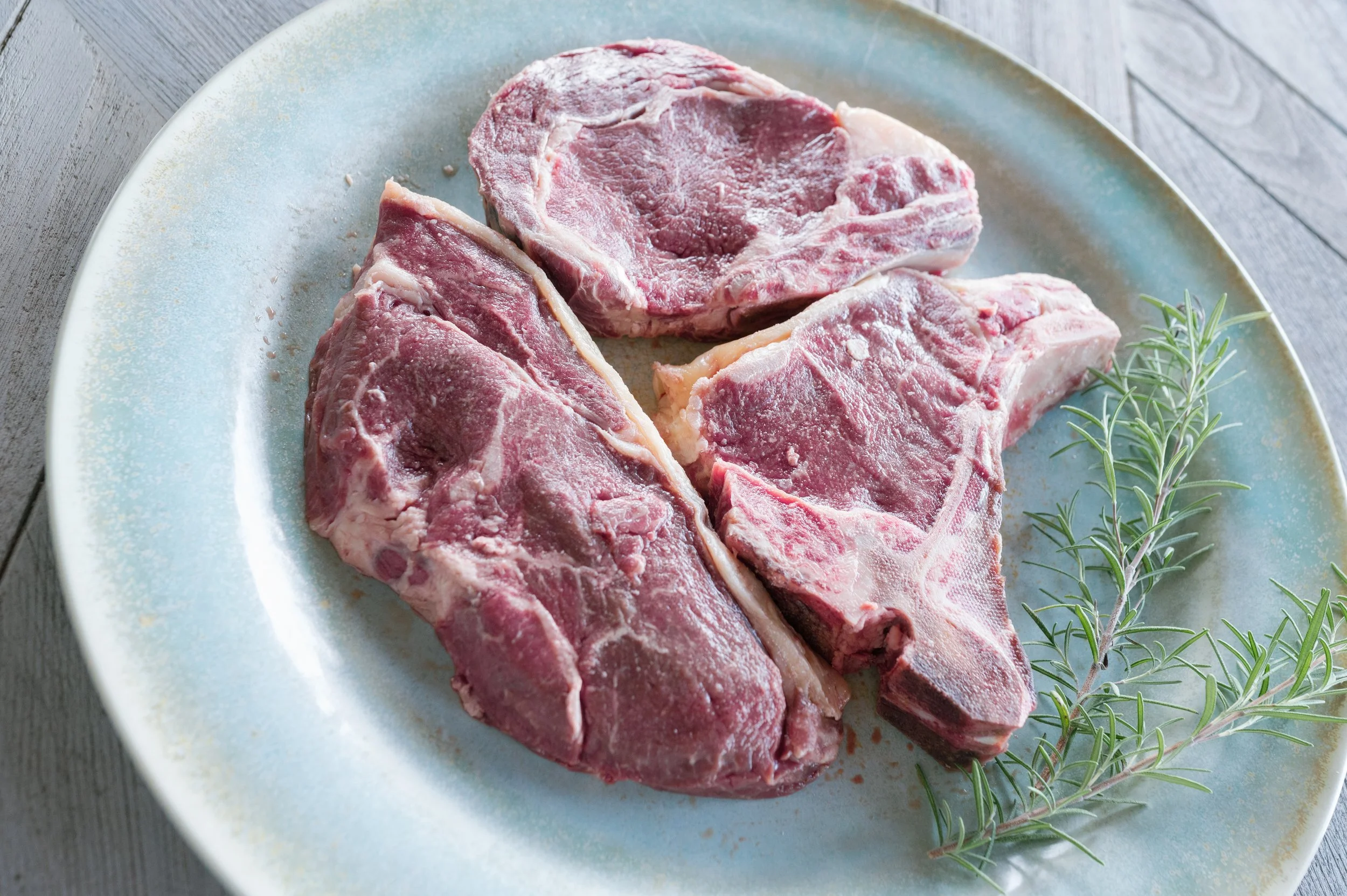
Corey puts it simply: “With a commercial T-bone, you need a knife. With Wagyu done right, you need a fork. That’s the whole difference , the marbling, the tenderness, the flavor. It’s not close.”
What This Means for Your Plate
When you reserve a share, you’re not picking an individual cut, you’re getting a true cross-section of the animal. Once your beef is ready, you’ll work directly with our processor to build your cut list.
Steaks & Roasts
Ribeye, tenderloin, strip, sirloin, chuck, and more
Brisket & Short Ribs
Low-and-slow cuts most grocery Wagyu never offers
Full
Traceability
You know the farmer, the land, and exactly how it was raised.
Ready to Taste the Difference?
If you want to see where your beef is raised before you put a deposit down, Corey will show you around and put something on the grill. That's the kind of farmer he is.
If you're ready to reserve, you can do that right now.